Winter pressure is usually measured in hospitals: bed occupancy, ambulance handovers, waits in emergency departments. But a growing share of care for people at risk of becoming unwell now happens elsewhere: on virtual wards, in visits from community nurses and homecare teams, and in care homes.
These services exist to support people safely in the place they call home. They work best when professionals can access up-to-date information relevant to their roles, regardless of the organisation they work for.
Policy now places community services at the centre of winter
NHS England’s winter planning letter for 2026/27 asks local systems to develop plans jointly across acute, ambulance, community, mental health, primary care, local authorities and social care. For community services, it sets expectations for urgent community response, virtual wards and Hospital at Home, with senior clinical decision-making available through a single point of access at least 12 hours a day, 7 days a week.
Alongside this, the Neighbourhood Health Framework, published in March 2026, sets out how NHS organisations, local authorities and social care should work together around local populations. According to Care England’s summary, the first focus is on people with the most complex needs. That includes people living with frailty, care home residents, people who are housebound and people living with long-term conditions such as COPD, diabetes and dementia.
Many of these are the same people supported by virtual wards, community nursing and homecare. The policy direction is clear: more care beyond hospital walls, planned and delivered together.
The gap is between systems, not people
Most health and care organisations already record information digitally. The challenge is that a care home’s care management system, a GP’s clinical record, a community team’s record and a virtual ward’s platform are often separate.
When they connect, a clinician can review recent observations and the care team’s notes without chasing updates or re-entering records.
Information captured in someone’s home can contribute to decisions made elsewhere in the system. That reduces duplication and supports safer handovers between teams.
Virtual wards depend on good information
Virtual wards and Hospital at Home services enable eligible patients to receive hospital-level care at home, with clinical oversight and appropriate support. That model depends on the team having reliable, time-stamped observations they can review alongside their own assessment.
When readings are taken consistently, using recognised tools such as NEWS2 where appropriate, clinicians can see how a person’s condition is changing over time, not just how they are at a single point. That supports informed decisions about whether to continue care at home, modify treatment, arrange a visit or escalate.
Information also needs to move with the person. People may be admitted to a virtual ward from a care home or their own home, or receive support following a hospital stay. Each handover is a point where information can be lost if systems do not connect.
Carers and community teams often see change first
Community nurses, homecare workers and care home staff are often the first to notice that someone is becoming unwell. A carer sees a person eating less or becoming more confused. A district nurse finds someone more breathless than at her last visit.
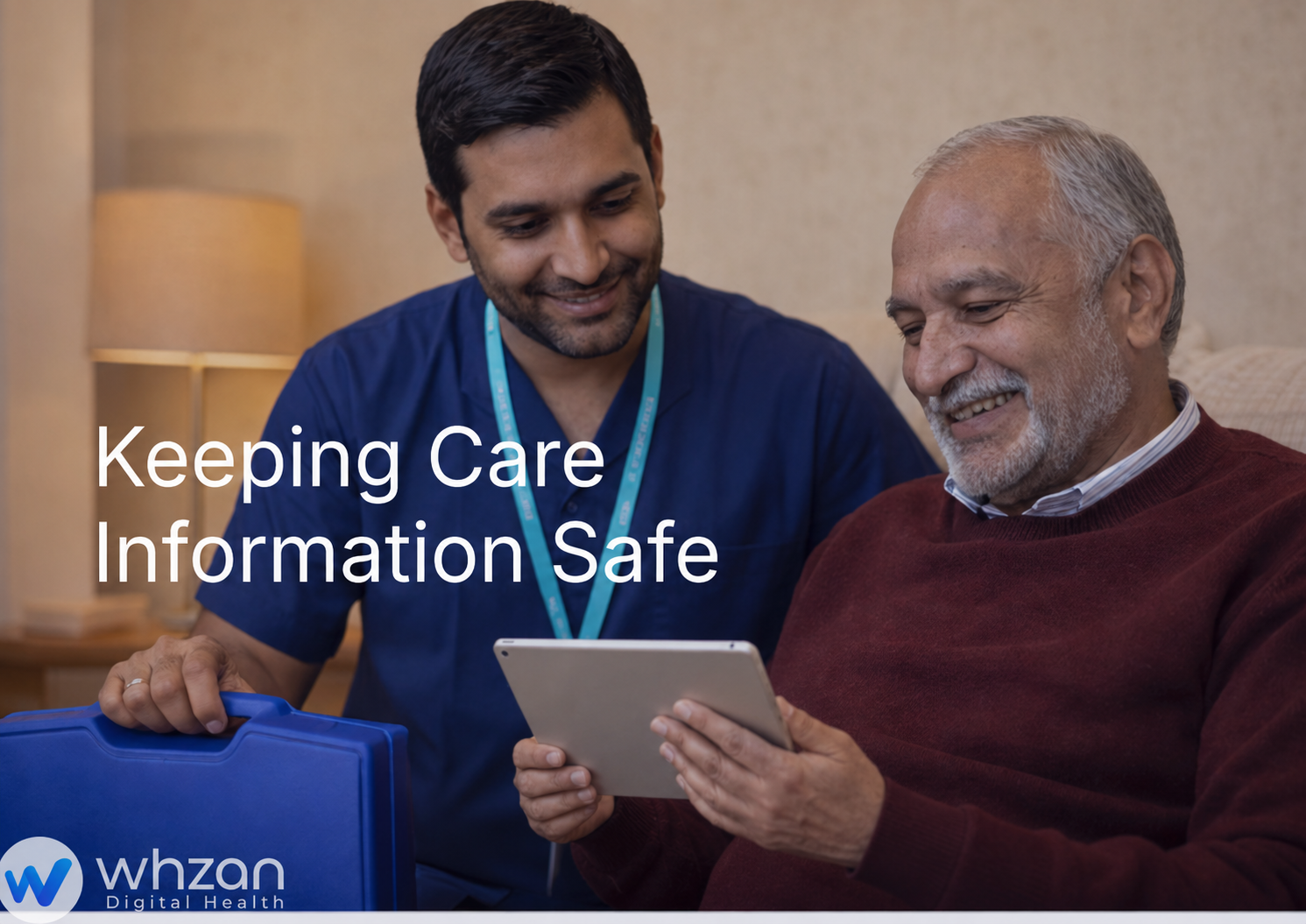
That knowledge is valuable, and structured health checks add context. Blood pressure, oxygen saturation, temperature and pulse, recorded consistently, give the GP, community team or virtual ward clinician something objective to review when a concern is raised. Instead of relying on description alone, both sides have relevant observations to support the conversation. This matters most in winter, when respiratory illness and infection increase the risk of deterioration and services are stretched.
Care England has welcomed the framework’s place for social care. Its Chief Executive, Martin Green OBE, said: “We welcome the recognition of social care as a core partner within neighbourhood health and its role in delivering more co-ordinated, community-based care.” Care England has also highlighted the need for clarity on funding and accountability, and for capacity to match demand. Care homes and homecare providers play an important role in helping people stay well at home. Clinical support, clear pathways and connected systems help them do it confidently.
From framework to practice
None of this replaces clinical judgement. Some people will need hospital care, whatever information is available. Others can be supported safely at home with the right team around them. The decision rests with the professionals involved, and good information helps them make it with confidence.
Neighbourhood health and the expansion of virtual wards are still developing, and much depends on funding, workforce and local relationships. This winter, connecting the systems that health and care teams already use is a practical place to start.
Whzan Digital Health connects carers, clinicians and care providers through the Whzan Blue Box and digital platform. Used across the NHS and care sector, it supports structured health checks, including NEWS2, and provides contextual information to support professional judgement. Whzan integrates with leading clinical and care record systems, including EMIS, Systmone and Rio, and with care management platforms including Nourish and PCS. These connections help bridge the gap between hospital and home.
To have an informal chat about your unique situation, please get in touch.